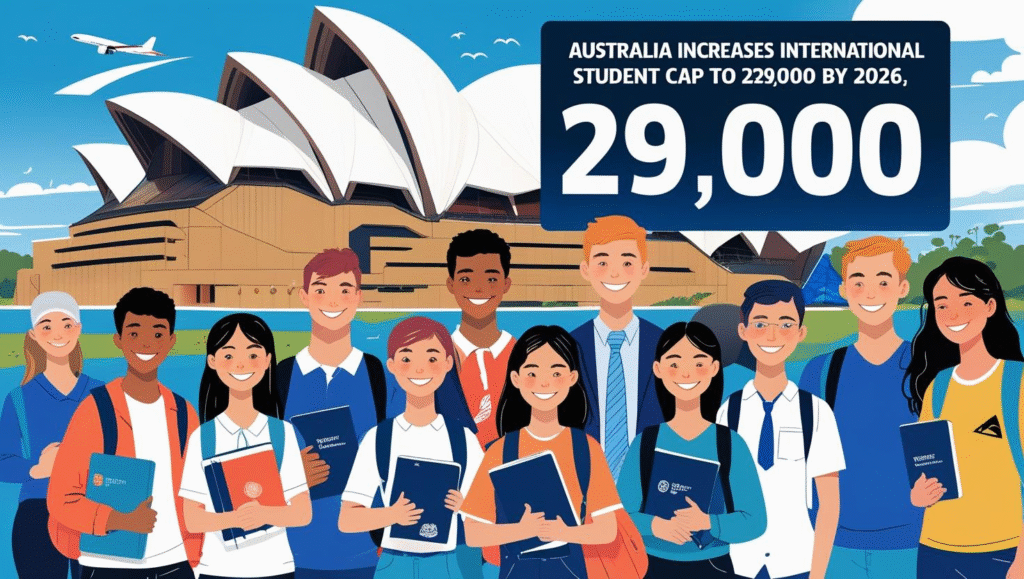
Australia has announced a major policy shift that will reshape its international education landscape. By 2026, the government will raise the cap on international student visas to 295,000, a move aimed at supporting the education sector while balancing migration policy.
Why Is Australia Increasing the Cap?
The decision comes as Australia looks to recover from the pandemic-era drop in international enrollments and to strengthen its position as a top global education destination. The international education sector is worth over $40 billion AUD annually and supports thousands of jobs across the country.

Key reasons behind the cap expansion include:
- Addressing labor shortages in critical sectors by allowing skilled graduates to stay longer.
- Supporting universities and educational institutions that rely on overseas students.
- Enhancing cultural and academic diversity in Australian campuses.
What’s Changing in 2026?
The new policy aims to streamline student visa processing, increase compliance checks, and prioritize high-quality education providers. Highlights include:
- Cap raised to 295,000 student visas annually by 2026.
- Stricter regulations on “ghost colleges” and low-quality institutions.
- Greater transparency in post-study work rights and migration pathways.
Impacts on International Students
For students, this expansion brings several opportunities:
- More visa slots, reducing the waiting period and competition.
- Access to top universities across Australia.
- Clearer migration pathways for those looking to transition to permanent residency.
However, students must also prepare for:
- Tighter compliance checks on genuine student intentions.
- Higher academic and financial requirements in certain sectors.

Reactions from the Education Sector
Universities and educational institutions have broadly welcomed the move, calling it a “positive step toward revitalizing Australia’s international education sector.”
Phil Honeywood, CEO of the International Education Association of Australia, said:
“This gives providers more certainty and helps students plan their futures with confidence.”
Looking Ahead
With the cap increase, Australia is signaling that it remains open to international talent and committed to global education. The next steps will involve policy detailing, collaboration with institutions, and ensuring the student experience remains strong.
Conclusion
Australia’s decision to expand the international student cap to 295,000 by 2026 is a bold move that reflects its strategic priorities in education, workforce development, and global competitiveness. For students around the world, it represents renewed hope and opportunity.